
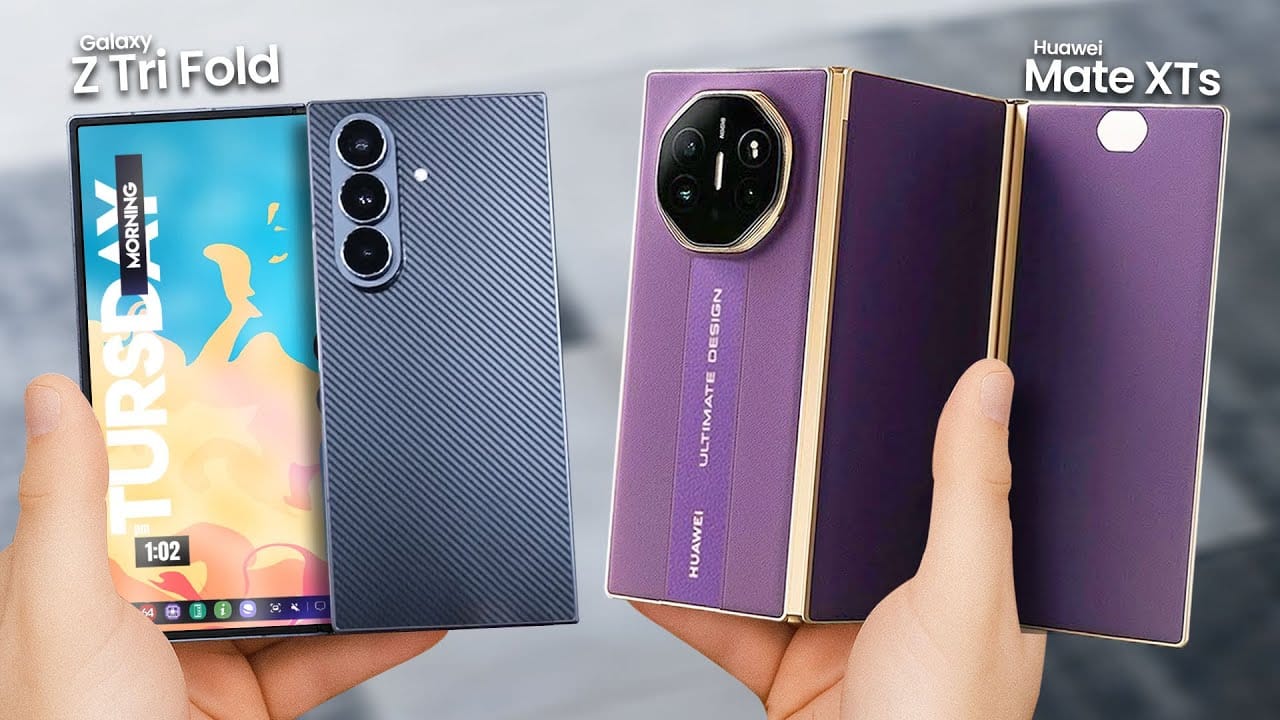
The generation of dual-fold telephones is ultimately here, and the opposition is heating up. Samsung has simply made the Galaxy Z TriFold official, and it is going head-to-head with Huawei`s Mate XTs Ultimate Design, the successor to the world`s first commercially to be had tri-fold phone.
Both gadgets push the envelope of what`s feasible in foldable hardware, however they take substantially extraordinary tactics in shape factor, show engineering, software, and ordinary person philosophy.
Folding Philosophy: Inward vs Outward
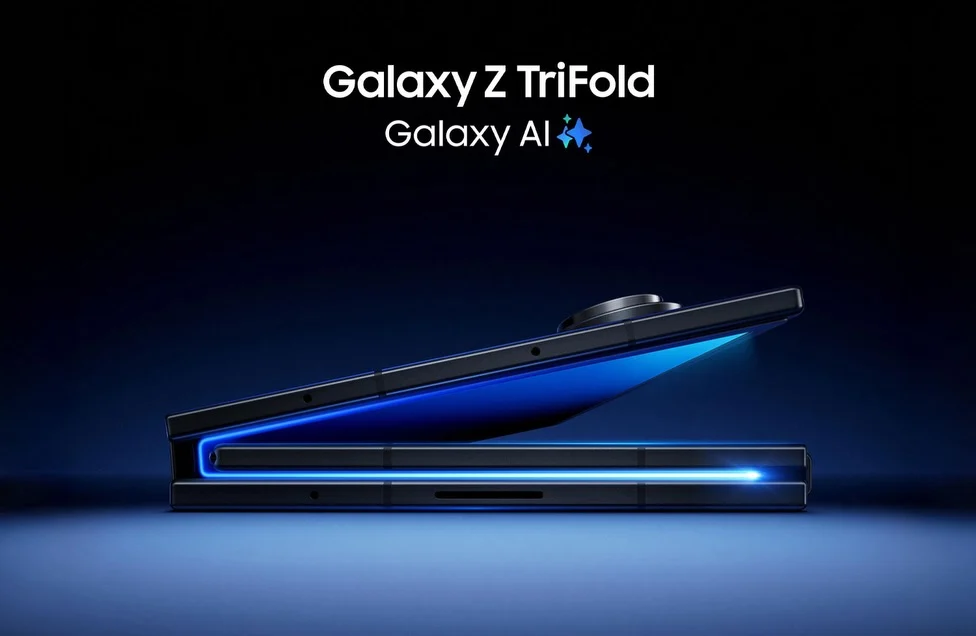
The most fundamental difference between the two lies in how they fold. The Galaxy Z TriFold folds inward, protecting its expansive 10.0-inch Dynamic AMOLED 2X display within a dual-hinge design.
When shut, it presents a familiar 6.5-inch cover screen that mirrors modern smartphones. This approach offers greater protection for the main display, especially in high-dust or abrasive environments.
Huawei, on the other hand, embraces an outward-folding Z-shaped form in the Mate XTs. The display wraps around the body, allowing the device to switch between a 6.4-inch smartphone mode, a 7.9-inch intermediate mode, and a fully expanded 10.2-inch tablet.
It’s more versatile on paper, but with one clear trade-off: the primary screen is always partially exposed, which could raise durability concerns in the long run.
Display Technologies and Stylus Input
Both foldables stretch out to round 10 inches whilst completely opened, however Samsung wins on refresh rate. Its 10-inch QXGA+ panel gives a 120Hz adaptive refresh and 1600 nits of brightness, sponsored via way of means of a 6.5-inch 2600-nit cowl screen.
Huawei counters with a barely large 10.2-inch OLED show offering a 3K decision and 90Hz LTPO refresh. The agency additionally integrates M-Pen three stylus support, that is absent on Samsung`s TriFold, notwithstanding its tablet-like ambitions.
This offers Huawei an area for innovative customers and productiveness tasks, in particular whilst paired with its superior hinge layout that lets in multi-perspective usage. Still, Samsung`s panel is brighter and smoother, presenting a greater top rate viewing revel in overall.
Build Quality and Materials
Both gadgets are engineering marvels, however their construct philosophies range as well. Samsung makes use of Armor Aluminum with a titanium hinge and Gorilla Glass Ceramic 2 at the front, supplying a fairly slender 12.9mm folded profile and IP 8 water resistance.
Huawei is going heavier on substances science, claiming aerospace-grade metal with 2 00MPa strength, an eight-layer hinge buffer structure, and a hinge device that permits 0.1° precision.
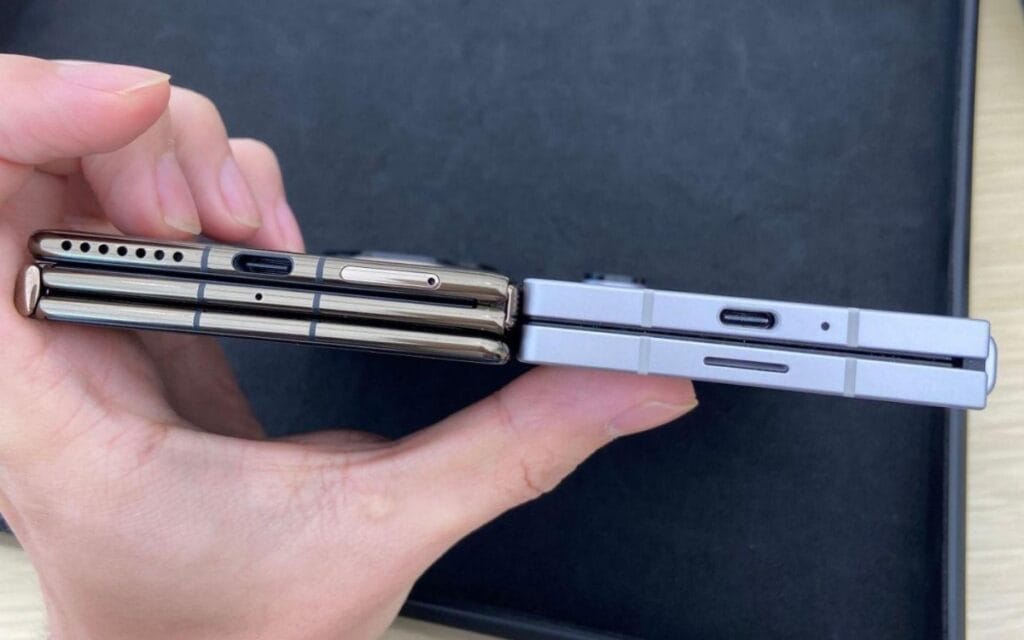
Despite the Mate XTs sounding like a tank, it manages to live lighter at 298g in comparison to Samsung`s 309g. Huawei additionally boasts a thinner opened up profile at simply 3.6mm at its slimmest point, besting the TriFold`s 3.9mm.
Performance, Battery, and Charging
Samsung relies on Qualcomm’s Snapdragon 8 Elite for Galaxy (3nm), paired with 16GB RAM and up to 1TB storage. Huawei opts for its own Kirin 9020 chip, which it claims improves performance by 36% over its predecessor.
Both phones pack 5600mAh batteries, but Huawei wins decisively on charging: 66W wired, 50W wireless, and 7.5W reverse. Samsung lags with 45W wired and 15W wireless charging.
Camera Capabilities
Samsung arms its Z TriFold with a 200MP main sensor, a 12MP ultra-wide, and a 10MP telephoto lens with 3x optical zoom. It also includes two 10MP selfie cameras, one on the cover and one inside.
Huawei opts for flexibility over uncooked pixel count: a 50MP major digital digicam with variable aperture, a 0MP ultra-extensive with macro capabilities, a 12MP 5.5x periscope telephoto lens, and a 1.5MP multispectral sensor for colour fidelity. There`s additionally an 8MP the front digital digicam.
Both devices boast powerful cameras, but Samsung’s advanced AI processing and reliable image tuning give it an edge. Huawei’s setup is versatile, yet Samsung may deliver better real-world results.
Read More: Galaxy Z TriFold Price in Pakistan, Samsung’s thinnest and biggest foldable
Software and Desktop Experience
Samsung ships the TriFold with Android sixteen and One UI 8, making sure complete Google offerings and app compatibility. Huawei, nevertheless beneathneath U.S. sanctions, ships the Mate XTs with HarmonyOS 5.1, which lacks local Google app guide out of doors China.
On the productiveness side, Samsung`s DeX mode works natively at the device`s 10-inch display, letting it double as a mini-laptop with out an outside monitor. Huawei`s laptop mode calls for projection onto an outside display, making Samsung`s answer greater seamless for multitasking.
Verdict: Samsung Has the Edge
The Samsung Galaxy Z TriFold feels greater whole and sensible for international users. Its inward-folding layout protects the display, at the same time as the intense 120Hz screen, Snapdragon eight Elite chip, and complete Android sixteen with DeX help make it a effective and polished foldable.
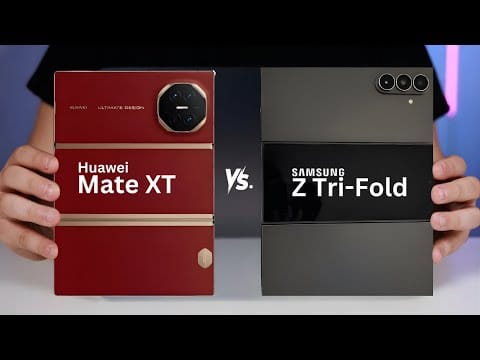
Huawei`s Mate XTs is ambitious with stylus help and quicker charging, however its outward-fold layout and HarmonyOS barriers preserve it back. For most, the Galaxy Z TriFold is the smarter choice.
For more daily updates, please visit our News Section.